After my less-than-raving review of La Laguna de Latacunga, in support of fairness and balance, I thought I should write about a really spectacular lagoon not so far away. Even though it doesn’t involve me running. The lagoon sits in the crater of an dormant volcano, Quilotoa, a couple of hours from Latacunga.
Life in Latacunga, whilst I am volunteering at a pre-school ‘teaching English’, is the most hermit-esque I have experienced on my travels so far. I’m a very positive person, so my lack of words on this town could speak volumes. Hence I was excited to escape the drudge on a volcanic/mountainous/lagoon adventure with a friend at the weekend.
The first leg of our journey was a bus ride from Latacunga, up (further) into the mountains to Zumbahua. Zumbahua is a small town at 3700m altitude, populated by indigenous, or Quechua people. After getting off the bus we wandered around the market, and I got an idea of the everyday essentials in Zumbahuan life. We did stick out a fair bit; my fair hair; our backpacks; not to mention standing (at least) head and shoulders over 90% of everyone. Actually maybe 100%. My friend overheard a woman telling her child to behave themselves, or the gringos would take them away! I was simultaneously relieved and disappointed not to see the cui (guinea pig), bargaining we’d heard took place here, and we took a car onwards to Quilotoa.
The Quilotoa crater and lagoon are not visible as you approach, only when you walk up to the edge of the rim, can you see the incredible picture-postcard view. Because of this, I couldn’t manage to get the whole thing in one photo (even on panoramic mode; I tried).
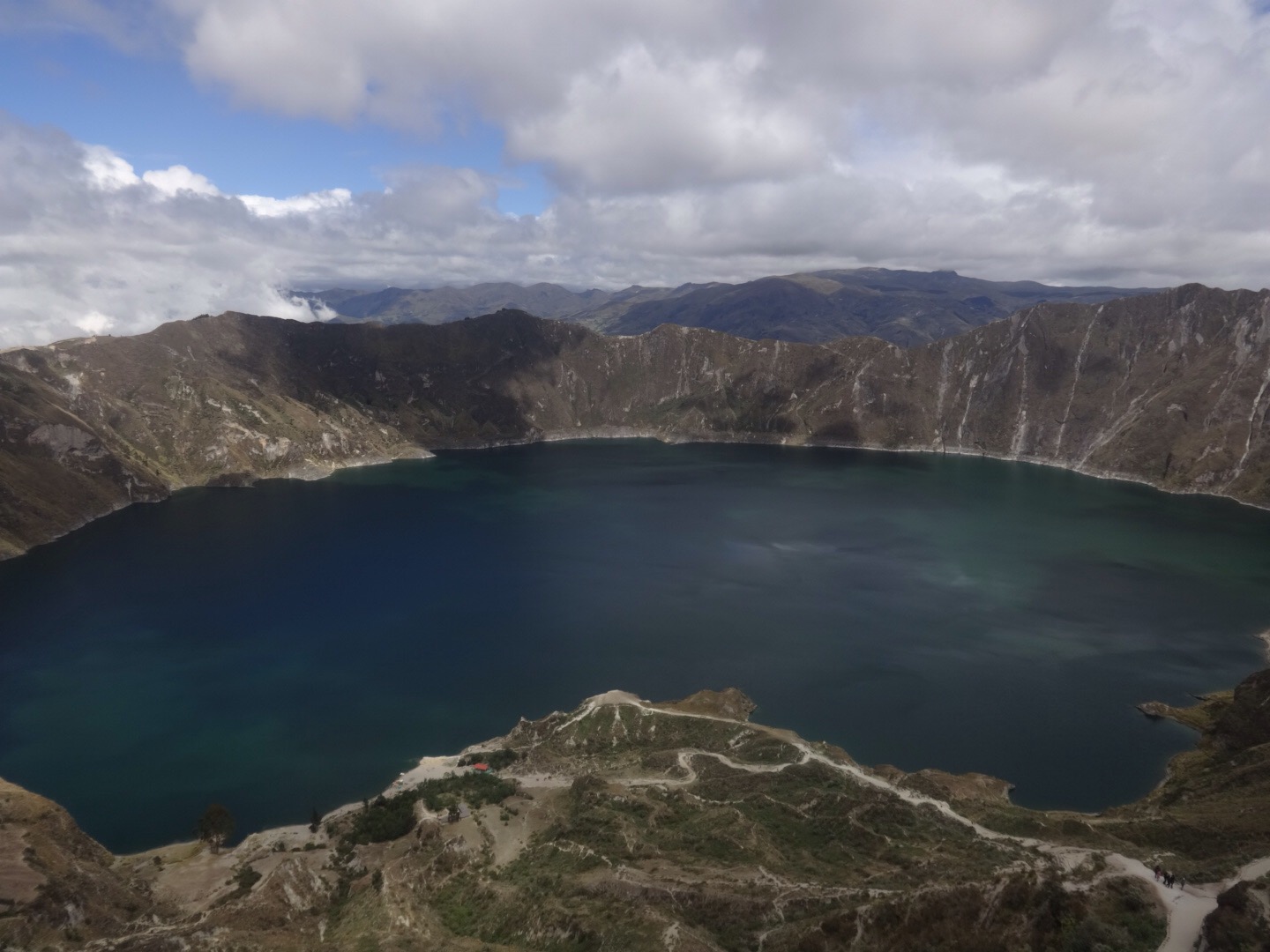
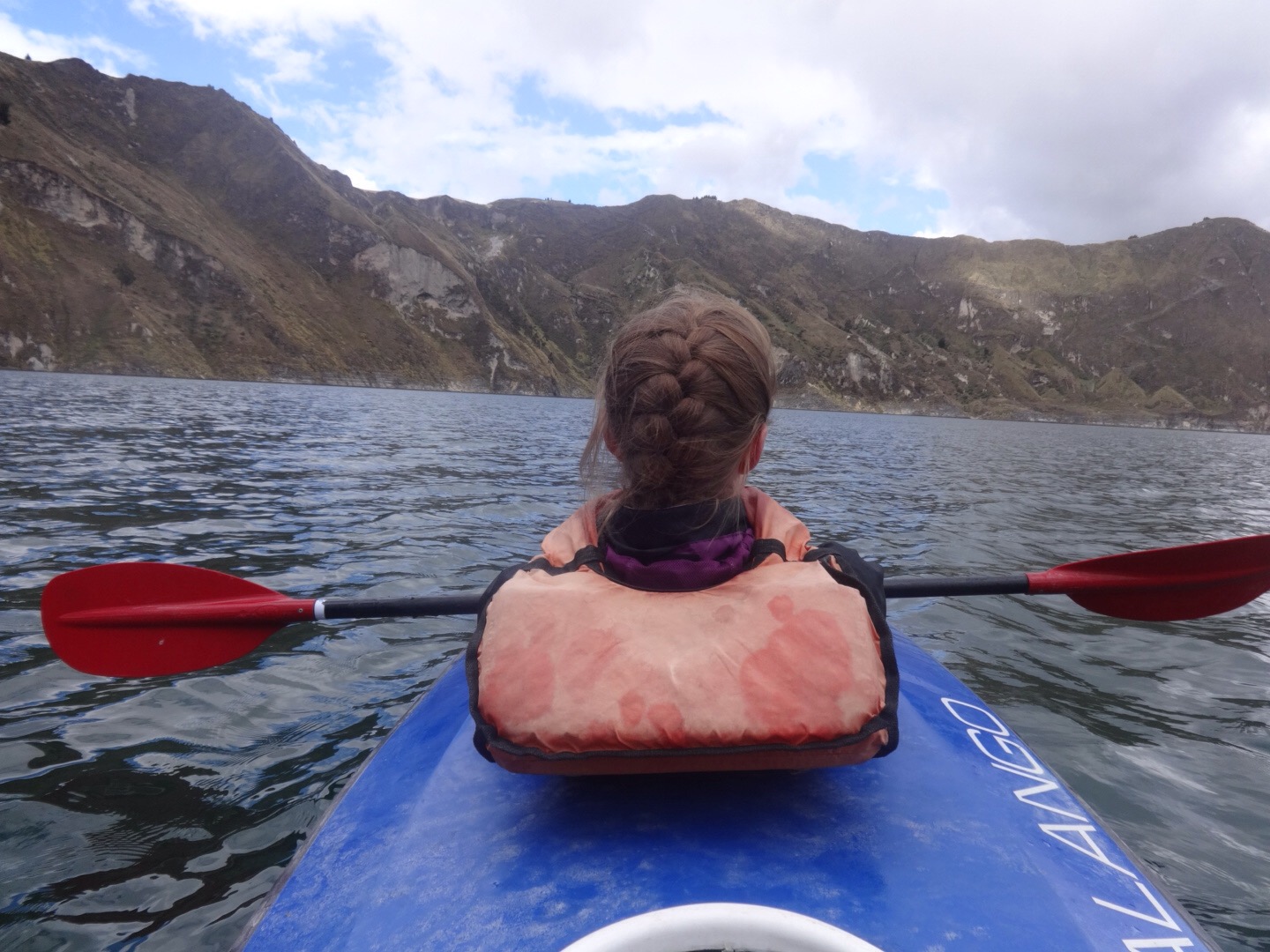
The descent into the crater is a steep and sandy incline. Although not easy on the legs, the beautiful scenery made it far less than a chore. After breathing in the beauty for a while we reached the shore of the lagoon and took a leisurely paddle around in a kayak. Supposedly dormant, there was still evidence of volcanic activity which we found in hot water seeping from the rocks, painting them bright red and orange with mineral deposits, and natural jacuzzis bubbling up to the surface of the lake.
Back on shore we set up camp, collected firewood, and watched the sun go down behind the steep walls of Quilotoa which surrounded us. After a not-so sound night’s sleep, with strong winds and hard ground, waking up to the views of the lagoon made it worth it. One aspect which was particularly incredible was the reflections of the sky and the clouds on the lagoon. Being so close to the clouds, their shadows painted a flowing, dramatic contrast of colours on the surface of the vast lagoon.
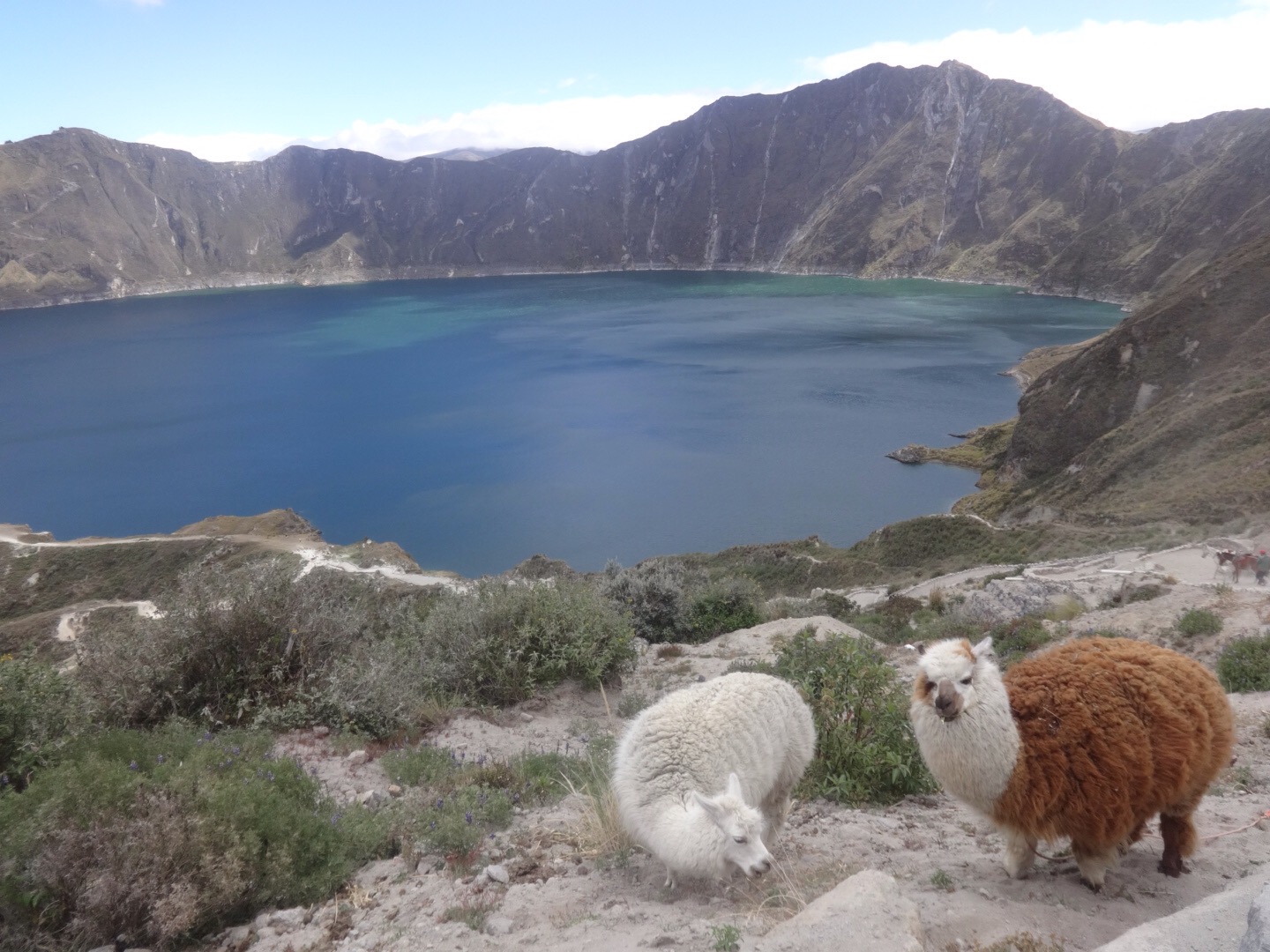
Later in the day it was time to make the dreaded ascent back up to the mouth of the crater. Aside from the steep and slippy terrain, we were making the climb up to 3900m altitude. We took it slow and edged our way back up, taking a while longer than on the way down, and meeting some llamas on the way. They weren’t really as friendly as they might look in this photo.


Love your llamas. Love your writing. You do not overtell. You live gaps for the imagination. Very good stuff.
LikeLike
I meant leave not live. Do you not think maybe your llamas are alpacas?
LikeLike
Could be alpacas! I can’t tell the difference!
LikeLike